• Home
  • Museum History
  • Blog
  • Free Scholarly Articles
  • Dissertations
  • Historical Pioneers
  • Rising Stars
  • Thurston Smith Advocacy Award
  • Books
  • Podcasts
  • Free Workbooks
  • Leadership Interviews
  • Hall of Fame
    • Roland Williams
    • Delbert Boone
    • Marc Fomby, CEO
    • Alfred Coach Powell
    • Cherie Hunter
    • Micheal Johnson, MSW
    • Lonetta Albright
    • Fred Dyer
    • David Whiters
    • Carl Hart
    • Andrea Barthwell
    • Carl Bell
    • Benny Primm
    • Lydia Muyingo
    • Monica Webb Hooper
    • Ijeoma Opara
    • Renee Cunningham-Williams
    • H. Westley Clark
    • Michael V. Stanton
    • Renee M. Johnson
    • William A. Cloud
    • Allecia Reid
  • Dr. Carl Bell
  • Dr. Fred Dyer
  • Adolescent Corner
  • Educational Videos
  • History of A.A.
  • Movies
  • Songs
  • Celebrities In Recovery
  • Gone Too Soon!
  • DREAMS CUT SHORT
  • Story of the Month
  • Webinars
  • Becoming a trainer
  • Bibliographies
  • Biographies, Autobiographies and Memoirs
  • Black Temperance Movement
  • Non-African American Contributors
  • Acknowledgments
  • Contact Us
Menu

Online Museum of African American Addictions, Treatment and Recovery

Street Address
City, State, Zip
Phone Number

Your Custom Text Here

Online Museum of African American Addictions, Treatment and Recovery

  • Home
  • Museum History
  • Blog
  • Free Scholarly Articles
  • Dissertations
  • Historical Pioneers
  • Rising Stars
  • Thurston Smith Advocacy Award
  • Books
  • Podcasts
  • Free Workbooks
  • Leadership Interviews
  • Hall of Fame
  • Trainers
    • Roland Williams
    • Delbert Boone
    • Marc Fomby, CEO
    • Alfred Coach Powell
    • Cherie Hunter
    • Micheal Johnson, MSW
    • Lonetta Albright
    • Fred Dyer
    • David Whiters
  • Scientists
    • Carl Hart
    • Andrea Barthwell
    • Carl Bell
    • Benny Primm
    • Lydia Muyingo
    • Monica Webb Hooper
    • Ijeoma Opara
    • Renee Cunningham-Williams
    • H. Westley Clark
    • Michael V. Stanton
    • Renee M. Johnson
    • William A. Cloud
    • Allecia Reid
  • Dr. Carl Bell
  • Dr. Fred Dyer
  • Adolescent Corner
  • Educational Videos
  • History of A.A.
  • Movies
  • Songs
  • Celebrities In Recovery
  • Gone Too Soon!
  • DREAMS CUT SHORT
  • Story of the Month
  • Webinars
  • Becoming a trainer
  • Bibliographies
  • Biographies, Autobiographies and Memoirs
  • Black Temperance Movement
  • Non-African American Contributors
  • Acknowledgments
  • Contact Us

"I am Somebody!"

February 17, 2026 Mark Sanders

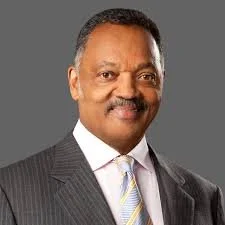
Today I received the news that civil rights leader Reverend Jesse Jackson Sr. died. Jackson was a part of Dr. Martin Luther King's inner circle of civil rights leaders in the 1960's. He was present at the Lorraine Motel in Memphis Tennessee when King was assassinated. Jackson later moved to Chicago and founded Operation Push an organization committed to fighting for civil rights and he also ran for President of the United States in 1984 and 1988.

Jackson often spoke using phrases which for me resonate with the addictions advocacy movement.  He used these phrases years before the modern addictions advocacy movement took off. Down with Dope Up with Hope. Jackson understood that there was a relationship between drug use in the Black community and the absence of hope. He advocated for equity, fairness in housing and jobs as a way of increasing hope in the Black community. Jackson also frequently said in speeches, Down with dope. Up with hope. Register and vote. He understood that voting was a way a community could help to empower itself. He was right! During the modern addictions advocacy movement we adopted a slogan, We're in recovery and we vote! Addictions advocates such as William White, MA encouraged us to hold townhall meetings with political candidates and to be in support of those who support our desire to provide treatment for individuals with substance use disorder rather than incarceration.

As I type these words I am saddened by the death of Jesse Jackson Sr. When I was a kid in the 1960's Jim Crow laws were in full effect. A message from that era was that Blacks were inferior at everything. My mother would take me to Operation Bread Basket meetings on Saturday mornings (name later changed to Operation Push) and Jackson would have all the youth in attendance stand and repeat the affirmation below.

I am Somebody.

I may be Black. I am somebody.

I may be poor. I am somebody.

I may be hungry. I am somebody.

I may be uneducated. I am somebody.

I may be in jail. I am somebody.

I am Black, beautiful and proud. I am somebody!

I must be respected. I must be protected. I am somebody!

Decades later I still feel pride as I type these words. I left those Operation Bread Basket meetings as a kid feeling like I was somebody in spite of all the negatives said about Black people. During the codependence movement of the 1990's charismatic speakers like Dr. John Bradshaw stressed the importance of affirmations for adults impacted by parental addiction in childhood. In the 1960's Jesse Jackson Sr. recognized the importance of affirmation and reciting them impacted my life.

Reverend Jackson, part of your legacy, having grown up in the segregated south, when Blacks could not vote, is having two sons serve in the U.S. Congress. I pray you are in heaven with the other great civil rights leaders including Frederick Douglass, W.E.B. Dubois, Rosa Parks, Dr. Martin Luther King Jr., Medgar Evers, Coretta Scott King, Fannie Lou Hamer, Malcolm X and Ella Baker. As we continue to face challenges in this current political climate I pray that we have internalized your generations courage, commitment to advocacy and strategies. R.I.P Jesse Jackson Sr. Thank you!

Tags Jesse Jackson Senior, affirmations, substance use disorder, advocacy

A Historical Event!

August 4, 2025 Mark Sanders

On July 31, 2025 history was made when Dr. Olykunbi Oyedele launched the first annual conference on Trauma, Mental Health and Substance Use sponsored by Living Vines Mental Health Foundation, an organization founded by Dr. Oyedele to address the intersection between trauma, mental illness and substance use disorders in Nigeria.

This informative conference was historic in that this was the first major conference which primarily featured African American and Nigerian speakers. In order for members of the African diaspora to heal historical trauma, the root cause of many of our mental health and substance use challenges, collaborations across the Atlantic Ocean between African Americans (the descendants of the European slave trade) and Africans living in the Motherland will play an important role in that healing. 

African Americans bring to the table knowledge of evidence based practices and peer based recovery support and our brothers and sisters in Africa bring a great awareness of African cultural practices and the teachings of the ancestors. This combination when integrated could ignite healing and recovery worldwide.

The conference was particularly inspiring given current tensions between African Americans and Africans. A biproduct of the psychological impact of colonialization. Onward!!

Tags conference, African Americans, Africans, Nigeria, trauma, Mental Illness, substance use disorder

POWERED BY SQUARESPACE