By Mark Sanders, LCSW, CADC
In his most recent monograph, Post Traumatic Growth and Flourishing in Addiction Recovery, Historian William White defines recovery flourishing as “An exceptional level health that includes meaning, purpose and societal contributions. A level of growth, that far exceeds the healing of injuries caused by addiction.”
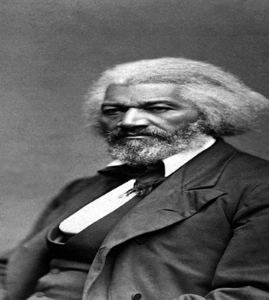
As one of the first prominent African American recovering alcoholics, Frederick Douglass embodied White's definition of recovery flourishing. Traumatized during slavery, Douglass utilized the alcohol given to enslaved Africans by slave holders as medicine for his traumatic stress symptoms. Douglass believed alcohol was used to control the enslaved Africans, thus he stopped drinking! His pathway of recovery was an act of rebellion and he flourished in recovery.
As a youth, the slave holder’s wife started to teach Douglass to read. When the slave holder got wind of this, he said to his wife, “If you teach him to read it will be impossible to keep him a slave.” He was correct! Douglass escaped slavery, and he initiated recovery, motivated by his famous quote, “We can't stagger to freedom.” He thrived/flourished in recovery.
Douglass: Became a leader of the Black Temperance Movement.
Became a national leader and speaker of the abolitionist movement.
Wrote 3 bestselling autobiographies.
Founded The North Star, an influential newspaper in Rochester New York.
Fought to end slavery during the civil war.
Impacted Abraham Lincoln's decision to allow Black men to fight in the Union Army.
Advocated for the 13th, 14th and 15th Amendments to the U.S. Constitution.
Advocated for women's rights.
Served in high government positions, including: U.S. Marshall and Recorder of Deeds for Washington D.C.. Minister and Consul General for Haiti.
He was the highest-ranking African American in government during the 19th century.
Conclusion In January of 1986, I taught my first addiction studies course. That was the year crack cocaine replaced marijuana as the number one sold street drug and it had a devastating effect on African American communities. Hopelessness was in the air! At the end of the first class a student handed me a quote. "Why be satisfied with the good when you can aim for the best. The good is too often the enemy of the best!" That quote had a profound impact on my clinical career. It reminded me that post traumatic growth and flourishing were possible in recovery. If Frederick Douglass was able to thrive after the catastrophic trauma of slavery, imagine what your clients are capable of.