
Today is the first day of Black History Month. As I type this post there are 502 political bills aimed at blocking the teaching of Black History at elementary schools, high schools and colleges throughout the country. What makes the teaching of Black History so dangerous for those set out to ban it? The teaching of Black History is a threat to the status quo. When taught it has the ability to reduce ignorance, increase empathy and bring people closer together, especially those in the next generation. For African Americans, the history can be a source of pride and a reminder of your resilience. Cultural pride can lead to self-love. Self-love is a substance use disorder protective factor. Resilience offers hope that life transformation, including recovery is possible. Happy Black History Month!
Recovery Definition and Principles for African Americans With Substance Use Disorders Authored by Jonathan Lofgren, Joe Powell, Kasi Reed and Mark Sanders

There are numerous definitions of recovery. Most of the definitions focus on the individual. The most well known definition was developed by SAMHSA.
A process of change through which individuals improve their health and wellness, live a self directed life and strive to reach their full potential.
In interviews with African Americans in long term recovery we learned that recovery in African American communities has additional features beyond the individual. They viewed recovery as more communal, holistic and connected to the upliftment of the African American community as a whole. A group of seasoned substance use disorders professionals formed a committee to define recovery in African American Communities and the communities recovery principles.
African American Recovery Defined
African American recovery is restorative, holistic, and preventive; it includes physical, mental, social. and spiritual growth. Recovery embraces values and traditions of African American culture, and it’s communal and interconnected with our people. Recovery involves participating in family, neighborhood, community, and individualized healing that contributes to sustained health and wellness.
Principes of Recovery for African Americans
Hope. With all that we have endured, hope increases in recovery; it’s the belief that maintaining recovery leads to a bright future.
Purpose. Nia (purpose) in recovery for African Americans involves activities which help individuals and families make meaningful change, and that those changes also strengthen and support the health and wellness of our neighborhoods and communities.
Cultural Expression. Cultural expression is a protective factor that can be manifested in cultural celebrations, cultural holiday’s, art, dance, movement, music, poetry, singing, spoken word, and theater.
Trauma Informed Recovery. Recovery involves healing historical and present trauma in our body, mind, and community.
Recovery is supported through socio-economic-political-cultural justice. This activism involves seeking, pursuing, and demanding justice in all areas of life, and is an important aspect of African American culture and recovery.
Joy. In recovery, joy is an inner experience of happiness and satisfaction with life; it becomes an inspirational light for our community.
Recovery is a dimension of Freedom. Recovery is healing, empowering, restorative and liberating for African American individuals, families, and communities.
Advocacy. African American recovery concerns itself with the community. In the spirit of mutual aid societies and civil rights movements, recovery involves taking a stand for, lifting-up, in solidarity with and speaking-out for the health and wellbeing of our community.
Spirituality. Spirituality in recovery is often maintained with a strong sense of correction, peace, meaning, and love. There are multiple pathways of spirituality in recovery, including; religion, Imani (faith). mindfulness, breath work, physical disciplines, belief in higher powers and beyond.
Family, neighborhood, and community driven. African American recovery includes connection with the recovery community, family, friends, neighbors, and the community as a whole.
© 10/2021 Jonathan Lofgren, Joe Powell, Kasi Reed, Mark Sanders
National Women's History Month
A salute to African American Women who have made historical contributions to Substance Use Disorders Treatment and Recovery.

Clara McBride-Hale. "Mother Hale" Founder of Hale House in New York City. Mother Hale housed children prenatally exposed to heroin in the 1960's and 70's, children prenatally exposed to cocaine in the 1980's and 90's and children born HIV positive.

Andrea Barthwell, MD, FASAM. Dr. Barthwell is the former President of The American Society of Addiction Medicine and she served as Director of Demand Reduction at the Office of the National Drug Control Policy under President George W. Bush.

Lonnetta Albright. As former Director of Great Lakes ATTC, Lonnetta helped shift Substance Use Disorders Treatment from the acute care model solely, towards a recovery oriented system of care. Under her leadership Great Lakes ATTC published a monograph series authored by historian William White, MA on recovery management and recovery oriented system of care. This series played a role in helping to shape the future of treatment and recovery services.
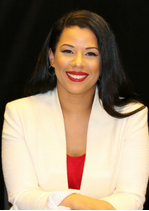
Corrie Vilsaint, PHD. Dr. Vilsaint is the principal investigator at the Recovery Research Institute and Center for Addiction Medicine at Massachusetts General Hospital and research fellow at Harvard Medical School. Some of her research focuses includes recovery capital, reducing discrimination among individuals in recovery and racial health equity in remission and recovery.

Ijeoma Achara-Abraham, PsyD. In her role as a consultant, trainer and strategic planner, Dr. Achara-Abraham is one of the nation’s experts in helping cities and states transform their system to a recovery oriented system of care.

Tonier Cain. Tonier is an author, entrepreneur, movie producer and one of the nation’s foremost advocates and speakers on trauma informed substance use disorders treatment.

Anita Bertrand Bradley, LSW, LICDC. Anita is founder of Northern Ohio Recovery Association. NORA is a model program offering a full range of recovery services. Anita's work has been recognized nationally. She is the recipient of Faces and Voices of Recovery, Joel Hernandez Community Recovery Award, she was honored by President Obama 's Administration as a champion of change and Smart Women Magazine, Women who Excel Entrepreneur Award.

Ayana Jordan, MD, PHD. Dr. Jordan's extensive research, educational and clinical work focuses on increasing access to evidence based substance use disorders treatment for Black, Latinx and Indigenous persons of color nationally and abroad.

Dawn Tyus, PHD, LPC. Dawn Tyus is the Principal Investigator of the African American Behavioral Health Center of Excellence, she is also PI and Director of Southeast Addiction Technology Transfer Center at Morehouse School of Medicine.
A Storied Career: Interview with 2021 NAADAC Enlightenment Award Winner, Mark Sanders

Mark Sanders, LCSW, CADC, is the Illinois State Project Manager for the Great Lakes ATTC, MHTTC, and PTTC. Mark is a published author, trainer, educator, and mentor, as well as the founder of the Online Museum of African American Addictions, Treatment, and Recovery and the co-founder of Serenity Academy of Chicago, the only recovery high school in Illinois.
If you have never attended a training hosted by Mark Sanders, you're missing out. Mark has a unique ability to be at once both energizing and reassuring. His presentations are equal parts inspiration and intellect – a captivating mix of stories, memoire, and facts. He has motivated and educated countless members of the SUD workforce throughout his nearly 40-year career. For these reasons and many more, Mark Sanders, LCSW, CADC, has been selected as the recipient of the 2021 NAADAC Enlightenment Award, the 2021 Community Behavioral Healthcare Association of Illinois Frank Anselmo Lifetime Achievement Award, and the Illinois Association for Behavioral Health’s 2021 Lawrence Goodman Friend of the Field Award.
The Great Lakes ATTC, MHTTC, and PTTC congratulate our colleague, Mark Sanders, on these well-deserved awards for his many years of exemplary service and leadership. In celebration of his accomplishments, we asked Mark to share his thoughts on the field of SUD recovery services and how he has achieved success throughout his career. Click here to continue reading.


Lessons Learned From Native American Communities on Recovery
November is National Native American Heritage Month. In this post I would like to share lessons we all can learn about addictions recovery from Native American Communities. One commonality African Americans share with Native Americans is centuries of trauma imposed on us by White Americans. As African Americans we experienced 250 years of slavery, Jim Crow Laws, lynchings, police brutality and mass incarceration. Native Americans experienced several hundred years of massacre, their culture and land taken away. As a result of this historical trauma, Native Americans developed the highest alcoholism rate in the world.
Today, some Native Americans tribes are achieving some of the highest recovery rates in the world, by healing historical trauma and returning to the cultures which were taken from them. One group I would like to highlight is White Bison founded by Don Coyhis, by helping tribes return to culture and healing historical trauma, White Bison is helping tribes achieve 40 to 70% recovery rates.
Canada, our neighbors to the north also have a history of inflicting trauma on First Nation Tribes. There is a documentary called The Honour of All, which tells the story of a First Nation Tribe that went from 100% alcoholism to 95% recovery. They have maintained a 95% recovery rate for over 35 years by returning to culture.
I once presented at a research conference on Addictions in Canada. All the top U.S. researchers were there. I suggested that the entire conference take a journey to the reservation and learn how a First Nation Tribe has maintained a 95% recovery rate for 35 years. I truly believe that recovery in African American Communities will involve a return to the culture that was stolen from us during chattel slavery.
A LETTER TO JUDGES: WHO HEAR CASES INVOLVING CUSTODY OF AFRICAN AMERICAN CHILDREN OF PARENTS WITH SUBSTANCE USE DISORDERS

I have had a long and rewarding career as a substance use disorders professional. Still, there is one day that haunts me and probably will for the remainder of my career. A lawyer asked me to serve as an expert witness on behalf of his client, who was facing the potential permanent loss of custody of her daughter in the court system. The lawyer went on to say, Although the hearing has not occurred yet, the judge has probably already decided the case, since she won't allow the daughter to testify about how much she loves her mom.
The lawyer then handed me 1300 pages of social service progress notes on his client. These notes were so deficit based I knew that there was nothing written in these 1300 pages that would lead a judge to be empathetic to the birth mother’s cause. I conducted a strength-based interview with the mother, in prison. She was incarcerated for minor drug related offenses. I learned that she was an honor roll student and track star in high school. She enrolled in university following high school. At age 19 she fell in love with an older man. Through this relationship she was introduced to drugs. She started using to cope with feelings of abandonment when the relationship ended. He left shortly after their daughter was born. At the time I met with the mother she was arrested for, stealing goods from a store to buy drugs and food for one day. I immediately thought of the Lord’s Prayer, that says Give us this day our daily bread.
The day of the court appearance, the biological mother, who is African American showed up for court wearing a prison striped jump suit. Her hands and feet were shackled, and she was facing the possibility of total loss of custody of her daughter to White Foster parents. The only African Americans in the courtroom that day were me and the biological mother. This scene gave me images of slave auctions, where Africans were shackled, and their children were bought and sold.
During my testimony, the prosecutor asked me ‘yes’ or ‘no’ questions like, “Can stress lead to a relapse? Can parenting be stressful?” I answered ‘yes’ to both questions. Each time I tried to elaborate on my responses, the prosecutor asked the judge to silence my responses to questions I had responded to. A complete story could never be told about parenting in recovery.
I was able to share information about addiction and recovery during my testimony. The judge stated, “Your testimony is illuminating.” Then she told the biological mother that she would lose permanent loss of custody of her daughter. To say the mother was distraught would be an understatement. I will remember the look on her face when she learned that she would be separated from her daughter forever. Below are my recommendations for judges.
Make sure the voice of children is heard in these proceedings.
Change the format of the hearings. Child custody should not be manipulated by ‘yes’ or ‘no’ questions and answers. Whole stories need to be told.
Study addiction as a chronic disease. While it is progressive like cancer, I have never heard of a cancer patient losing custody of their children when symptoms return.
Be aware of your biases as a judge. Are there any racial or addictions biases which may impact your decisions in the court room?
Never allow mothers facing a loss of their children show up to court shackled.
YOU'LL HANDLE THAT TOO!

An African American female friend called me and said she relapsed recently. I immediately thought of the words of African American tennis star, the late Arthur Ashe, who contracted HIV through a blood transfusion.. A reporter asked Ashe, “Was Aids the hardest thing you ever had to deal with?” Ashe replied, “The hardest thing I have ever had to deal with is being Black in this society.”
Thinking of Ashe's comments, the trauma my friend has endured in her lifetime and her resilience, I said to her, “You have handled being a Black Woman in America. You will handle this too!”
I listened as my friend shared what led to her return to drug use and we also discussed language. I introduced her to the term reoccurrence of symptoms as an alternative to the term relapse. The term relapse is perceived as negative. Cancer patients don't relapse I suggested, symptoms return. I shared that Women for Sobriety calls a relapse A temporary setback! I shared with my friend the words of writer Johann Hari, “The opposite of addiction is not recovery. Its connection.
My friend smiled and said, I'm going to a meeting today.
THE DEATH OF ACTOR MICHAEL K. WILLIAMS: IMPLICATIONS FOR HARM REDUCTION AND TRAUMA INFORMED CARE

On September 6, 2021, Emmy Award Nominated Actor Michael K. Williams died of a drug overdose which included a combination of, cocaine, heroin and fentanyl. Williams played the iconic role of Omar in the HBO series The Wire and Chalky White in the HBO Series Boardwalk Empire. When drug related deaths occur, substance use disorders counselors are able to examine these tragedies from our clinical lens and think about the implications of such tragedies for our future work.
As a youth Michael K. Williams experienced abuse, neglect and depression. We now know that these co-occurring conditions lie at the core of addiction and almost always precede a substance use disorders. At seminars I often ask substance use disorders professionals to raise their hands if they are a trauma or co-occurring disorders specialist? Approximately 1% of participants raise their hand. In addition, many professionals in our field remain resistant, sometimes even hostile regarding the idea of harm reduction.
It is time for more substance use disorders counselors to become trauma specialists. According to Dr. Gabor Mate, trauma is at the core of addiction. The fact that over 50% of individuals with a substance use disorder also have a co-occurring disorder provides a strong rationale for us to become dual disorders specialists as well. With fentanyl being 50 times more potent than heroin, would Michael K. Williams still be alive if fentanyl strips were used as a harm reduction strategy? How many of your clients would stay alive long enough for the miracle of recovery to occur if harm reduction strategies were used?
Black Opioid Deaths Increase Faster Than Whites, Spurring Calls For Treatment Equity
September 10, 20215:00 AM ET
MARISA PEÑALOZA
A study published Thursday reveals a growing racial disparity in opioid overdose death rates. Deaths among African Americans are growing faster than among whites across the country. The study authors call for an "antiracist public health approach" to address the crisis in Black communities.
The study, conducted in partnership with the National Institute on Drug Abuse at the National Institutes of Health, analyzed overdose data and death certificates from four states: Kentucky, Ohio, Massachusetts and New York. It found that the rate of opioid deaths among Black people increased by 38% from 2018 to 2019, while rates for other racial and ethnic groups did not rise.
The study used data collected before the coronavirus pandemic began; preliminary data show that overall drug overdoses rose in 2020.
In the earlier waves of the opioid crisis, African Americans had lower rates of overdose deaths than whites, according to another study published last year in the journal Addiction, and Black rates stayed level from 1999 through 2012. However by 2013, white rates began to level off while Black rates began increasing. The new study from NIDA confirms the trend.
Click here to continue reading.
IN MEMORY OF THE WONDERFUL ALLISON PAYNE

We received the news over the weekend (September 13, 2021) of the death of former WGN News Anchor and journalist, Allison Payne (February 12, 1964 to September 1, 2021). Allison was a 9 time Emmy Award winner and a 21 year anchorwoman with WGN TV. Allison was also an international journalist and popular public speaker.
It is in her role as a fellow board member that I best remember Allison Payne. In the early 1990's Allison and I both served on the Board of Directors of The Reach Out and Touch Organization, founded by Its Executive Director, Reverend Jeffery Haynes. Reach Out and Touch was located in the Englewood community, on the south side of Chicago. Englewood is now called Chi-Rac and has a reputation as the murder capital of the U.S. When we were board members of Reach Out and Touch, the community was impacted by gang related gun violence over the control of crack cocaine sales. Reach Out and Touch offered several programs to address community challenges including prevention services, recreational programming as alternatives to drug activity, gang intervention, entrepreneur services, employment opportunities and addictions services.
At each board meeting, held in Englewood, was Emmy Award winner Allison Payne. She was famous and there she was in Englewood solving problems. The cameras were not present at those board meetings and there she was, a humble super star. Perhaps part of her motivation to serve was her own public story of addiction and recovery. On several occasions Allison brought pies which she baked to our board meetings. What celebrity would do that? Allison Payne! While I am sad writing this post, I know that Heaven just received a humble servant in Allison Payne. Rest in Peace Allison.
Lessons from the Recovery Legacies of Frederick Douglass and Malcolm X

Mark A. Sanders, LCSW, CADC; Illinois State Program Manager, Great Lakes ATTC, MHTTC, and PTTCPublication Date: Feb 11, 2021

Frederick Douglass was the first prominent American to recover from alcohol use disorder (White, 2014 ). Douglass's alcoholism was triggered by the trauma he endured in slavery. Douglass believed that alcohol was used to control the slaves. In his autobiography, Douglass stated that the enslaved would be abused Monday through Friday and given alcohol to drink on Saturday as medicine for the abuse (Douglass, 2019 ). In a speech in Scotland in March of 1846, Douglass stated, "When a slave was drunk, the slaveholder had no fear that he would plan an insurrection. No fear that he would escape to the north. It was the sober thinking slave who was dangerous and needed vigilance of the slaveholder to keep him a slave ( Douglass, 1846)."
Speaking on his own alcohol use, Douglass stated, "I used to drink. I found in me all those characteristics leading to drunkenness." He went on to state, "I have had some experience with intemperance. I knew what it was like to drink with all the ardor of a drunk. Some of the slaves were not able to drink their share. I was able to drink my own and theirs too. (Douglass,1846)."

Like Douglass, Malcolm X experienced trauma in childhood, which proceeded his substance use disorder. In his youth, Malcolm grew up in Omaha, Nebraska. He grew up in an environment of race riots and lynchings. His father was killed by the Klu Klux Klan, and his mother was placed in an asylum. Leaving a young Malcolm and his sibling to be placed in the child welfare system (Payne and Payne, 2020). If the ACE's test were available in Malcolm's youth, he would have scored high on childhood trauma exposure, a precursor to substance use disorders.
Both Frederick Douglass and Malcolm X achieved long term recovery, although their pathways of recovery differed. Douglass's pathway of recovery was social protest. Refusing to continue to use a drug he believed was used to control the Africans who were enslaved. Malcolm X's recovery story began in prison and is often described as a quantum spiritual awakening. All the urges to use drugs were removed instantly (Haley, 1999).
Both men became advocates in recovery. Douglass was one of the founders of The Black Temperance movement. Malcolm fought for civil writes and started a program he called "Fishing For The Dead." The goal of this program was outreach to incarcerated African Americans to help them with recovery, employment, and to avoid future incarcerations (Haley, 1999).
The recovery legacies of Frederick Douglass and Malcolm X offer three lessons:
1. Addictions professionals who work with African Americans with substance use disorders need to be trauma specialists. Like Douglass and Malcolm, many African Americans with substance use disorders have legacies of historical and current trauma that include slavery, lynchings, mass incarceration, police brutality, high unemployment, and community violence.
2. Advocacy can be a liberating force for African Americans in recovery. There is a famous 12-step slogan, "To keep it, you've got to give it away." In other words, one can maintain their own recovery by helping others. Both Malcolm X and Frederick Douglass were advocates for African Americans in their recovery. One question to ask African American clients is: “How can the African American Community benefit from your recovery (Williams, 1993)?”
3. It is important to honor multiple pathways of recovery for African Americans. Neither Douglass nor Malcolm X initiated recovery through a treatment facility. While many African American who initiate recovery through traditional treatment, other African Americans initiate and maintain recovery through 12-step recovery, faith-based recovery, medication-assisted recovery, solo recovery, dual recovery, rites of passages, and return to culture.
About the author Mark Sanders, LCSW, CADC is Illinois state project manager for the Great Lakes ATTC, MHTTC, and PTTC. He is founder of Online Museum of African American Addictions Treatment and Recovery. Photo Credit: Frederick Douglass, Library of Congress, public domain
References Douglass, F. Narrative of The Life of Frederick Douglass (2019) Kindle Edition.
Douglass, F. Temperance and Anti-Slavery. Address Delivered Paisley Scotland, March 30, 1846.Renfrewshire Advertiser, April 11, 1846.
Haley, A. The Autobiography of Malcolm X. (1999) Ballantine Books. New York, NY
Payne, L & Payne, T. The Dead Are Arising: The Life of Malcolm X. (2020). Liveright Publishing Corporation. New York, NY
Williams, C. & Laird, R. No Hiding Place. (1993). Harper Collins, New York, NY
White, W. Slaying The Dragon. (2014). Lighthouse Institute. Bloomington, IL.
In Memory of Denise Eligan

It is with sadness that I write of the death of my long term friend and colleague Denise Eligan and with gratitude that I was able to call her a friend for many years. You are fortunate if you have a colleague like Denise Eligan in your life time. Denise and I worked as young drug counselors in 1985 at Hyde Park Hospital. The unit census dropped to 2 clients and my supervisor decreased my work hours from 40 per week to 20 hours per week. At 20 hours per week I would not have been able to afford to pay rent or buy groceries. Denise told our boss that rather than my working 20 hours per week that she would split her work hours with me and we could each work 30 hours per week. Who does that!!
I am most grateful to Denise for the impact that she had on my family. In the 1990's my brother had an active addiction and said he wanted to write screen plays about his life experiences. I told him of my friend Denise Eligan who was a writer extraordinaire that could co-write with him. I was hoping that while they wrote together her recovery would rub off on him. It did! Denise helped him get placed in detox and he is now in long term recovery! He co-wrote movie scripts with Denise during the early phases of his recovery and often spoke of how her wisdom contributed to his recovery. My brother and sister's in law also achieved long term recovery after Denise placed them in treatment.
Denise was an amazing drug counselor and said to me years ago People in recovery have other skills besides counseling. Her life was a living testament of this. Denise received a Masters Degree in Creative writing from Columbia College, Chicago. She wrote and directed a play, co-wrote 3 motion picture screen plays and was the editor of Recovered Magazine, one of the first recovery magazines in the nation. Denise was not only a creative writers, she was one of the nation’s best behavioral health grant writers. She was awarded a grant for an innovative program in Gary, Indiana Public Housing. The program was named Named Miracle Village and Provided addictions treatment services for women in the public housing development. Miracle Village consisted of 4 adjacent row houses, each provided specialized services for women seeking recovery (the recovery center, mental health facility, medical clinic and day care center for the client's children). Denise secured hundreds of thousands of Dollars as a Grant Writer for the State of Illinois.
Denise's retirement from the State was Graceful. She pursued painting upon retirement and quickly developed a reputation as a great artist. It is written that most people use little of their God given talents. Along with individuals like Ben Franklin and Paul Robeson, Denise Eligan made the most of the many talents God gave her. I am blessed that she was a part of my family’s life for so many years.
How ‘Strange Fruit’ Killed Billie Holiday
by Brandon Weber February 20, 2018

Billie Holiday and Mister at Downbeat in New York City, ca. Feb. 1947. Courtesy Library of Congress.
“Strange Fruit” may have been written by American song-writer and poet Abel Meeropol (a.k.a. Lewis Allen), but ever since Billie Holiday sang the three brief stanzas to music in 1937, she’s owned it.
Holiday, born Eleanora Fagan, said she always thought of her father when she sang “Strange Fruit.” He died at age thirty-nine after being denied medical treatment at a Texas “whites only” hospital. Because of that memory, Holiday was reluctant to perform the song, but did so anyway to tell people about the reality of life as a black man in America.
“It reminds me of how Pop died,” she wrote in her autobiography. “But I have to keep singing it, not only because people ask for it, but because twenty years after Pop died, the things that killed him are still happening in the South.”
The song was so poignant for Holiday that she laid down some rules when she sang it at her gigs: She would close the evening with the song; the waiters would stop service when she began; and the room would be in total darkness except for a spotlight on her face. There would be no encore.
“Lady Day,” as Holiday was called by many at the time, began to work the song into her repertoire sixteen years before Rosa Parks refused to give up her seat on the bus in Montgomery, Alabama. Jazz writer Leonard Feather referred to the song as “the first significant protest in words and music, the first significant cry against racism.” Click here to continue reading. Click the arrow below to watch the video.
DRUG ABUSE COUNSELORS IN HEAVEN
I received a call today from a young Addictions Counselor who told me that her mentor, Emmitt Hines died. In 1982, the year I became a drug counselor, Emmitt was my first mentor. He was a member of the Illinois Chapter of the National Black Alcoholism Council (NBAC). These seasoned pros from NBAC volunteered to do trainings to prepare the next generation of African Americans to become Certified Addictions Counselors. While many of these trainers went on to have stellar careers, Emmitt Hines was by far the best presenter. He had a charismatic style which included humor, laughter and spontaneous diagrams on the flip chart. He taught with such clarity that anyone could retain his lessons. Instantly, I wanted to be like Emmitt Hines. He was someone I knew I could learn from.
Emmitt worked at Hyde Park Hospital in the early 1980's as an Addictions Counselor and that too was impressive as most African Americans I knew worked at agencies. I asked him if I could volunteer to co-lead a therapy group with him at the hospital to continue learning from him. He said, yes. I quickly discovered that he was as effective as a group therapist as he was a presenter! His style was charismatic, I marveled at how he could make a whole group of clients laugh. He counseled with a rhythm. It is difficult to describe to new counselors today how counselors like Emmitt counseled with a Charismatic Rhythm. The old school counselors had the ability to leave an entire room spellbound. New counselors would have to see it to understand. I thought of Emmitt as an African American Sigmund Freud.
In the Mid 1980's Emmitt invited me and another newer counselor James Brumley to his office on North Michigan Avenue (The Magnificent Mile!). To be honest with you, when he put the key in the door I did not expect it to open. As far as I knew, only multimillionaire John. H. Johnson, Publisher of Ebony, Essence and Jet Magazine's had an office on N. Michigan Avenue. The key worked! Emmitt, James and I talked about partnering to open a counseling center on Michigan Avenue.
While we never opened the center, Emmitt Hines stretched my imagination. I followed in his footsteps and became a counselor at Hyde Park Hospital. I opened a private practice office on The Magnificent Mile, with views from my windows of both the Chicago River and N. Michigan Avenue. I helped train future African Americans pursuing certification as Addictions Counselors and I have done presentations all over the world trying to display the clarity and style that I learned from Emmitt.
If there is a need for Drug Abuse Counselors in the here after, Heaven just received one of the best. Rest in Peace Emmitt!
Above and Beyond: Creating a Welcoming Environment for African Americans with Substance Use Disorders

Publication Date: Jan 28, 2020

Mark Sanders, LCSW, CADC Nearly 45% of clients seeking treatment for a substance use disorder (SUD) miss their second outpatient session (Duncan, Miller, Sparks, 2004). The numbers are even higher for African Americans with substance use disorders (Sanders, 2014). Reasons African Americans drop out of addiction treatment early include provider bias, feeling unwelcome, lack of medical insurance, hours of operation, program location, cultural mistrust, etc. This article focuses on how to create a welcoming environment for African Americans seeking recovery. It is dedicated to a father who came up to me at a seminar I was presenting and told me, "My son just died of an opiate overdose death. He tried many programs, and none could keep him engaged in treatment for more than one session."
I have visited hundreds of treatment centers throughout the country in my 38 years as an addictions professional. I have found that Above And Beyond in Chicago does the absolute best job of engaging African American clients into substance use disorder treatment. This article is based in an interview with Dan Hostetler, executive director of Above and Beyond.
About Above and Beyond The program provides outpatient substance use disorder treatment and is located on the west side of Chicago, the most economically poor part of the city. Most of the clients receiving services at Above and Beyond are African Americans who are either homeless, poverty-stricken, or have no income.
The Décor

According to Dan, "We went out of our way to find the most comfortable chairs that anyone could feel comfortable sitting in regardless of height or body type. Our ceilings are high, and we have gone to great lengths to assure the pictures on the wall are great. Our clients do not expect what they see when they walk through the doors. We are intentional in making sure that the environment does not have an “institutional” feel. We even periodically change up the decor. Our clients are important enough for us to do that."
In a discussion about Above and Beyond's decor, a colleague stated, "When clients walk in and see a chandelier made out of antelope horns, they start to believe anything is possible." When I shared this quote with Dan, he laughed and explained, "We didn't kill an antelope to make that chandelier. It’s plant-based, made of resin. We do not even serve meat dishes in our program. All the meals are plant-based."
The Receptionist Dan stated, "Our receptionist has a master’s degree in psychology. We went through many interviews to find the right person. The receptionist is at the center of what we do. He is the first person that clients meet. At many agencies, clients are greeted by a security guard, who then introduces the client to a clinically sensitive person. By then, the client may 'already have an impression of the program before they've met the counselor. We want to make sure that the first person our clients meet is clinically competent. The receptionist also greets new clients and guests when they walk through the door and answers the phone. Most agencies I know of have a recorded phone message. We decided a live person works best. We have tracked the receptionist’s time and have learned that he spends 90% of his time providing pre-engagement services, putting clients at ease, crisis interventions, and answering questions via phone of persons seeking recovery."
The Waiting Room

Dan stated, "We play music in the waiting room. We subscribe to Calm Radio and have experimented with playing everything from samba, blues, jazz, and a variety of other types of music. Client input is everything, so we often ask clients, 'What do you think of the music?' We have reading materials in the waiting room ranging from Rolling Stone, and African American magazines to comic books. We pay attention to what our clients read in the waiting room. Some clients who cannot read enjoy comic books. Current clients often populate the waiting room. We have learned from new clients that this usually helps them feel welcome, connection, and hope. We provide coffee, water, and other beverages."
Drop-in Center "When we first opened, we operated by appointment, and very few people showed up, or they showed up late for their appointment. As soon as we moved towards a walk-in clinic protocol, the program became full.
I suggested to Dan that if one revisits Maslow's hierarchy of needs, a therapy appointment might not be at the top of the list for economically-challenged African American clients who are homeless and that a drop-in center made sense. In an ATTC/NIATX Blog post (2020), NIATX Coach Mat Roosa wrote, "The introduction of developing a walk-in approach often yields a great deal of anxiety. Such as, we won't be able to plan our day. We will have no way of knowing who will show up. How will we staff this? In response to these concerns, Mat asks, "how do emergency rooms do it? How do grocery stores do it?"
Shared Model Dan stated, "Clients would come in looking for their counselor and would get disappointed if their counselor was out of the office. We moved towards a shared model in which the entire staff has a clinical background. Any staff member can be available to meet with clients on the spot if their assigned counselor is unavailable. We learned from clients that this was a good way for them not to leave feeling a sense of rejection and that their needs that day could be met on the spot."
Conclusion I am finishing this article on January 20, National Martin Luther King Jr. Day. I end this article with an excerpt from a speech Dr. King gave to African American middle school children at Barratt Jr. High School in Philadelphia in 1967. The speech is entitled "What is Your Life's Blueprint." Dr. King stated,
"In your life blueprint should be a deep belief in your own dignity, your own worth and your own somebodiness. Don't allow anybody to make you feel that you are nobody. Always feel that you count. Always feel that you have worth and always feel that your life has ultimate significance."
Above and beyond does an excellent job of communicating this message to clients served.
References Duncan, B. L., & Miller, S. D. (2000). The heroic client: Doing client-directed, outcome-informed therapy. Jossey-Bass.
King, Martin L., Jr. “What is Your Life’s Blueprint?” Speech. Barratt Jr. High School. Philadelphia, PA. 1967
ATTC/NIATx Service Improvement Blog. 2020 Vision: What will you Improve In The New Year? January 2020. Mat Roosa, LCSW-R. http://attcniatx.blogspot.com/2020/01/2020-vision-what-will-you-improve-in.html
Sanders, M. (Ed.). (2016). Substance use disorders in African American communities: Prevention, treatment and recovery. Routledge.
About the Author Mark Sanders, LCSW, CADC, is an international speaker in the behavioral health field and author of 5 books on recovery. He is the curator of The Online Museum of African American Addictions Treatment and Recovery. Visit the online museum at:www.museumofafricanamericanaddictionsrecovery.org
Mark will share more strategies in the upcoming webinar hosted by the Great Lakes ATTC, MHTTC, and PTTC. Please join us!
Engaging African Americans in Substance Use Disorder Treatment
February 5, 2020
11:00am - 12:00 pm CST
Register
Andre Johnson of Detroit Recovery Project discusses solving substance abuse

Andre Johnson is the president and CEO of the Detroit Recovery Project Inc., a multi-service agency that provides a wide spectrum of support services to the city’s recovery community.
The Detroit native has 23 years of professional experience implementing programs to tackle substance abuse. Since its inception in 2005, the Detroit Recovery Project has devoted more than $15 million to its mission to helping addicts become drug-free.
Rolling out spoke with Johnson about his commitment to the community and the work he does daily.
What is the mission and vision of the Detroit Recovery Project?
The Detroit Recovery Project is a private nonprofit corporation dedicated to supporting recovery, which strengthens, rebuilds and empowers individuals, families and communities who are experiencing co-occurring mental illness and substance use disorders. This is accomplished by ensuring access to integrated networks of effective and culturally competent holistic health services.
In your leadership role, what is your commitment to the community?
My commitment to the recovery community in Detroit is to be an advocate for individuals [who] are affected by substance use disorders in addition to ensuring resources are available in the community to support long-term recovery.
What would you say about the target group you serve?
The target group of men and women we serve are individuals [who] have suffered not only from the “throes of addiction,” but [also] have suffered physically, spiritually, mentally and emotionally. Many individuals have lost hope and often have a feeling of either “helplessness or hopelessness.”
Why should someone want to support your nonprofit financially or in other ways?
Supporting an organization like the Detroit Recovery Project is a good investment in our community. The financial returns …benefit the Detroit community greatly. Who wouldn’t want to invest in a safe drug-free community?
The more individuals we are able to assist and serve, results in family reunification and crime reduction as well as other by-products of drug usage. For example, individuals’ health improves, reducing HIV and hepatitis from spreading [as well as preventing] other co-morbid health and mental health disorders from developing and exacerbating from substance use, ultimately improving the quality of life in Detroit.
How important is technology to the day-to-day operations of the organization?
Technology is important for several reasons. … Electronic file access helps to keep real-time data on individuals as well as increase client retention and develop qualitative and financial reports.
I AM A BLOGGER, JOURNALIST AND MEDIA ENTHUSIAST. I AM PASSIONATE ABOUT COVERING ENTERTAINMENT, FASHION AND BEAUTY. KEEP UP WITH ME AT CASSINTHECITY.COM
Every race, gender and culture must be welcome in treatment
February 23, 2018
Nicole Stempak
Mark Sanders, LCSW, CADC, is focused on patients’ recovery after they leave treatment facilities. For the last five years, he’s been helping to build recovery cultures. The idea is simple: Train people established in recovery to offer support in the very community where the clients are returning.
The movement requires providers and professionals to have an understanding of the neighborhoods and communities where clients live and work. “We want to know what resources exist within that community to support recovery,” Sanders says.
All too often, memories can trigger patients who may not have thought about using while in treatment. People, places and things can trigger cravings once they return home. It’s a problem Sanders has seen repeatedly during his 35 years as a certified addictions counselor. A consultant in behavioral health, he also has taught for more than 30 years at the university level and has authored five books. Sanders is co-founder of Serenity Academy of Chicago, the only recovery high school in Illinois, and past president of the board of the Illinois Chapter of NAADAC.
His most recent project has been the development of the Online Museum of African Americans Addiction, Treatment and Recovery, a resource geared toward frontline workers who want to work more effectively with African American clients. Addiction Professional recently caught up with Sanders to talk about treatment and recovery in the African American community.
AP: Can you describe the prevalence of addiction among African American communities?
Sanders: If we were to pay attention to media accounts, we might believe that addiction is more prevalent in the African American community. And yet, when you look at SAMHSA’s annual statistics on drug use by race and by gender, African Americans consistently rank third or fourth on the list in terms of actual use. For middle class African Americans and those in the higher socioeconomic brackets, we can expect to see a recovery rate as high as their white counterparts in the same socioeconomic brackets. The more recovery capital you have, the greater your chances of recovery. The challenge is where race and poverty comes together.
The greater challenge is they are more likely to be arrested for possession of substances and thus more likely to wind up in the criminal justice system. There’s evidence that receiving a felony has longer-term consequences than actual addiction. You can always recover. That drug-related felony arrest will follow you for a long time.
AP: What are some of the reasons behind addiction and disparity among African Americans?
Sanders: At the core of addiction among African Americans is some type of trauma, which is consistent with other groups. Among those who are economically disadvantaged or economically poor, trauma can also be connected to joblessness. What executive directors at for-profit treatment centers need to know is they may work with African Americans in corporate America, who might be dealing with trauma but also organizational stress, racism in the workplace, etc.
AP: How do you see that stress and trauma affecting African Americans’ mental health, recovery and treatment abilities?
Sanders: African Americans have experienced oppression for several hundred years in America beginning with slavery, Jim Crow laws, discrimination and high disparity in detention centers. One of the reasons they’re not No. 1 in terms of drug use is the protective factor. There are many factors that actually protect African Americans from mental illness and substance abuse, and it includes things like spirituality, the sense of ‘we’-ness, extended family orientation where you have a great deal of community support, the ability to utilize humor and dance and movement to help mitigate stress.
AP: Is there a danger in providers being colorblind?
Sanders: Everywhere we go as human beings, we bring our experiences with us. African American clients will then bring with them to treatments their experiences of being African American, and then you view the world through their lens. Some African Americans say, ‘If you don’t see color, you don’t see me because my race, my culture, my ethnicity has a way of shaping who I am. So therefore, if you say you don’t see color, literally, I don’t feel like you see me.’
The other thing is, if we don’t see color, we also may not have the opportunity to examine our own biases. We’re not really thinking about that if we don’t see color. Lately in the diversity literature, they’ve been talking about microaggressions, intentional and unintentional slights. It’s insulting people without even knowing we’re insulting them. We have to pay attention to these things so we don’t injure someone inadvertently.
AP: If providers don’t acknowledge race, are they ignoring experiences or situations?
Sanders: By not seeing race, there might be some other things programs may not see. If you’re an African American and you walk into a treatment facility, the first thing you may find yourself instinctively doing is looking at the artwork, similar to the way you would if you were in someone else’s house or a museum. And the first thing you might ask is, ‘Do I see images of myself in the artwork?’ Because sometimes the pictures on the wall at the treatment center can send a signal of who is welcome and who’s not welcome in that space.
I’m a patient engagement specialist, so one program invited me to come in and help engage their clients more effectively. They said 80% of their clients were missing their second outpatient session. I sat in their waiting room for two days to see the agency from the perspective of new clients coming in. I started going through the magazines in the waiting room. They had magazines like O, Good Housekeeping and Martha Stewart Living, but they served Latino and Hispanic gang members. There was nothing in those magazines that reflected who they were as people—and those types of things can send a signal about who’s welcome and who’s not welcome.
AP: What advice do you have for providers?
Sanders: Look at areas such as hiring. Does your staff makeup reflect the clients that you work with? We used to say addiction is an equal opportunity employer. Peter Bell [of Hazelden Betty Ford] said addiction is best treated when the cultural background in which it emerged is taken into consideration, meaning that treatment providers have to be willing to understand and learn something about the culture. I would say if a treatment center works with African Americans, Latinos, Hispanic or Asian clients, then they should learn some things about the communities they are serving.
When we’re providing clinical services, there’s something the clients bring to the table: their experiences and perceptions. Treatment providers are also bringing their experiences and their perceptions. So, not only do you need to understand the clients you’re working with, treatment providers also need to understand our own biases, our own assumptions, our own stereotypes. If we begin to understand those things, we can begin to see how our own experiences might impact the clients we serve.
AP: What is one thing our readers needs to know about this issue?
Sanders: It’s really critical that even if you work in a program for what we call acute care treatment—short-term treatment—for so many people, addiction is a chronic and progressive illness. With addiction and treatment, we see you for 28 days, whereupon you have what we call ‘a graduation.’ We often have zero to two contacts with you upon discharge, whereas in cancer treatment, they may follow up with you for five years. At a minimum, we need to monitor people longer.
Addiction Professional https://psychcongress.com/article/special-populations/every-race-gender-and-culture-must-be-welcome-treatment
Nicole Stempak is a freelance writer based in Ohio.
"RAP MUSIC IS THE CNN OF THE GHETTO"

The above quote "rap music is the CNN of the ghetto" is credited to Chuck D, lead rapper of the Rock in Roll Hall of Fame group Public Enemy. While Chuck D said the quote in 1989, it came to me as I was watching an episode today of The Evolution of Hip Hop, Season 3 Episode 4 (Netflix). The episode focuses on the history of Hip Hop in the South and highlighted the lyrics of a song by Kilo Ali of Atlanta, Georgia, during the height of the cocaine epidemic and mass incarceration of African Americans. The song is entitled Cocaine (America Has a Problem, 1990) and is a cautionary tale about the impact of crack cocaine on African American Communities. Some of the Lyrics are below.
Cocaine says she loves you, but she really don't. She say she'll always be there, but she really won't. She'll make you buy an Uzi, say go kill your brother or you're gonna lose me.
Click below to hear the entire song.
Click here to listen to other songs that serve as cautionary tales on the impact of drugs on African American communities for a half century. These artist should be hailed as prevention specialists
America's War on Drugs Has Treated People Unequally Since Its Beginning
BY JOHN H. HALPERN AND DAVID BLISTEIN
AUGUST 12, 2019

Billie Holiday

Judy Garland
When Prohibition ended in 1933, drug enforcers finally had a new agency they could call their own, the Federal Bureau of Narcotics. This launched the career of its first commissioner, Harry Anslinger, the person most synonymous with the phrase “war on drugs”—in fact, the first person to use it—and likely the first person, outside of any royal family, to be referred to as a “czar.”
Between 1930 and 1962, Anslinger established the standards that continue to serve as basic tools of the trade for America’s drug enforcement, such as dramatic drug busts, harsh penalties and questionable data. There remains serious disagreement in scholarly as well as political circles about how successful Anslinger really was in reducing drug sales and use in America, though he achieved several significant legislative victories, including the Uniform State Narcotic Drug Act, which fostered collaboration between federal agents and police in different states (each of which had its own specific laws).
But, as difficult as passing drug laws is, enforcing them effectively, consistently and fairly has proven to be virtually impossible.
Anslinger unapologetically divided the world into us and them, good and bad, right and wrong—and always black and white. While Anslinger’s 30-year war on drugs undoubtedly saved the lives of some individuals, his racial prejudices tarnished his reputation in ways that, even allowing for 20/20 hindsight, can’t be dismissed. The most blatant example was his disparate treatment of two of the nation’s most famous celebrities in the 1950s: Judy Garland and Billie Holiday. Click here to continue reading the article.
SHE FREED 17 PRISONERS FACING LIFE, WITH THE HELP OF KIM KARDASHIAN
By Nick Fouriezos

It’s the number that Brittany Barnett will never forget: 1374671. Seven digits assigned to her mother after she was arrested on a felony charge of assault and bail jumping related to her crack cocaine addiction.
The experience hit home as Barnett later changed career tracks, leaving accounting behind to study law at Southern Methodist University in Texas, a state that incarcerates more people than any other in the country. But since then, the former corporate lawyer has done more than she could have imagined for the plight of prisoners like her mom.
This spring, Barnett helped secure the release of 17 federal prisoners in 90 days under the newly passed First Step Act — a feat that drew national headlines because it was partially funded by Kim Kardashian West. It was the culmination of what she started in summer 2017 with the Buried Alive Project, a nonprofit working to eliminate life-without-parole sentences. “Life without parole is the second-most-severe penalty permitted by law in America, and we’re imposing this sentence on people with drug offenses. It’s mind-blowing to me,” Barnett says. “Reform, to me, is a fix. What we need is a fundamental shift to transform the system.”
Barnett has just finished a training event on compassionate release — where sick, elderly or disabled prisoners are set free early — for lawyers at the Washington, D.C., offices of lobbying giant Akin Gump when the Texas native lets her roots show. With a slight drawl, the 35-year-old spells out “B-O-G-A-T-A,” the 1,200-person town she grew up in, where the Rivercrest Rebels played high school football under a Confederate battle flag. “I can honestly say that growing up, I didn’t experience much racism,” she says. Instead, it showed up in less obvious ways, such as a childhood friend who got a life sentence for drugs when he was 23 years old. “We thought, Jeez, this is just East Texas. What I didn’t know is that he wasn’t an anomaly.”
The sweet tea and trap music lover’s goal today is to dredge up pro bono lawyers who are willing to work with some of the 1,600 people in the federal justice system who are serving life for drugs. Just getting that number was difficult enough: The Department of Justice wasn’t keen to share the information, Barnett says, and so her Buried Alive Project team had to piece together the records themselves. “If you don’t have a good counsel, it turns what is a difficult fight into one that is impossible. So the work she is doing is so important, just to ensure we have a fair and just system,” says David Safavian, deputy director of the Center for Criminal Justice Reform at the American Conservative Union.
The First Step Act is expected to lead to the release of more than 2,200 prisoners locked up for nonviolent drug crimes. But for many critics, it didn’t go far enough. While it eliminated so-called “stacked” sentences for future defendants, it didn’t reverse them retroactively for those currently in the system, meaning some people are serving up to 55 years for what may be only a five-year sentence today, Safavian says. To try to combat some of those challenges, Barnett recently launched the Third Strike Campaign, telling the stories of 13 prisoners who weren’t released under the First Step Act. “You have people spending life sentences today under yesterday’s laws,” Barnett says.
IT IS VERY IMPORTANT FOR LITTLE BLACK GIRLS IN BOGATA, TEXAS, AND OTHER RURAL AREAS, TO SEE THAT BLACK WOMEN ARE DOING THIS WORK.
BRITTANY BARNETT
The story of how Barnett and West joined forces begins with a critical race theory class that Barnett took at SMU — a class that she had to beg to be let into, because it was overbooked. “That was the only time I ever have” made an exception, says David Lacy, who was teaching the course. Barnett, studying to be a lawyer at the time, began investigating the human faces of a war on drugs that required 100 times as much powder cocaine as crack cocaine to invoke equal mandatory minimum sentences — a distinction mostly made along racial lines. “There were people talking about it 10 years ago, but it didn’t have nearly the momentum it has right now,” Lacy says.
It was in those studies that she met Sharanda Jones, the first woman serving life whom she would later help free through clemency in 2015, under the Obama administration. Soon after, she took on the case of Alice Johnson, a convicted drug trafficker and friend of Jones, whose moving video (below) reached West. The celebrity entrepreneur visited the White House in the summer of 2018 to discuss prison reform with President Donald Trump, and, a week later, the great-grandmother was granted clemency and released.
Still, West’s involvement didn’t come without controversy. As West helped fund a three-month sprint by Barnett and her business partner, MiAngel Cody, to release as many prisoners as possible earlier this year, criminal justice advocates complained about the attention she was getting — headlines implying West was becoming a lawyer and freeing these people herself, distracting from the years of work done by less-famous people on the ground. Amid those complaints, Barnett posted on Facebook that West had “linked arms with us to support us when foundations turned us down,” and that at the end of the day, “TWO Black women lawyers freed 17 people from LIFE W/O PAROLE sentences.”
Looking back at that moment, Barnett says she posted because she wanted to defend West against criticism. “People know that Kim’s not going to court and arguing in front of a judge,” she says. She understands that some people took that as her wanting credit, which she denies, before adding: “I stand on the fact that it is very important for little Black girls in Bogata, Texas, and other rural areas, to see that Black women are doing this work.” Even with many challenges ahead, Barnett has hope for one simple reason: The human narratives behind unjust sentences are starting to be told. “Being able to put a heartbeat to the number,” she says — a number just like her mother’s. Nick Fouriezos, Reporter